From Kanto to Paldea

Playing the entire Pokémon series, 1998 to now, without playing the same story twice.

12 games · 9 regions · 1 route

ROUTE · GEN 1—9

POKEMON
ROUTE

STOPS 12
REGIONS 9
HOURS ~365

> START

0 / 12 CLEARED

Why I built this

I grew up on these games and then lost track somewhere around the DS era. I picked up Scarlet, got a few hours in, and realised I would rather not start at the end — I want to go back to the beginning, replay the ones I remember, and finally meet the ones I missed.

So this is the route I drew for myself: every region, in order, exactly once. If you are in the same boat, take it and go.

Fair warning — these are opinions, not facts. Which version is “the definitive one” is an argument the community has been having for twenty years, and I land on one side of it. Where a call is genuinely contested I say so and give you the other option. Disagree freely; it is your save file.

Carlos Cativo · @cativo23

Why twelve and not twenty-two

Twenty-two mainline titles have shipped, but many of them tell the same story twice. Paired versions — Red and Blue, Scarlet and Violet — are identical apart from a handful of exclusive Pokémon.

And the remakes revisit regions already on the route: FireRed is Kanto again, HeartGold is Johto again, Let’s Go is Kanto for the third time.

Strip that out and twelve distinct stories remain. Every stop below opens up to show the full generation it came from, and which of its games I dropped.

The route

In release order. Each marker grows brighter with the hardware generation — from a dark Game Boy to a lit Switch — and every sprite is drawn in the graphical style of its own game. Open a stop to see the full generation it came from.

01 · KANTO

Pokémon Yellow

1998GAME BOY~25 H

The best of the three originals: it rebalances the roster, has the sharpest sprites of the generation, lets Pikachu walk behind you outside its Poké Ball, and brings in the Team Rocket duo from the anime. This is the only stop on monochrome Game Boy — which is exactly why it earns a place. It is where all of it starts.

New this generation: all of it. 151 Pokémon, the original type chart, and a single Special stat that handled both special attack and special defence at once.

If it feels too rough: FireRed (GBA, 2004) tells the same story with modern mechanics. It is the better-built game by a distance — but it skips the Game Boy era entirely.
All 4 Generation I games
  • Yellow (1998) — on the route
  • Red · Blue (1996 / 1998) — Yellow is the refined cut of the same story
  • Green (1996, Japan only) — never released outside Japan
Pikachu, as sprited in Pokemon Yellow (Game Boy, 1998)
02 · JOHTO

Pokémon Crystal

2000GAME BOY COLOR~30 H

The definitive cut of Gold and Silver: it adds the Suicune storyline, animated battle sprites, and the first playable female character in the series. Finish Johto and the whole of Kanto opens up behind it, which makes this the longest game of its era.

New this generation: the Dark and Steel types, breeding, held items, a real day and night clock, shiny Pokémon — and the Special stat finally splitting into Sp. Attack and Sp. Defence.

The strongest alternative on the whole route: HeartGold (DS, 2009) is widely held to be one of the best games in the series. If you make exactly one exception for a remake, make it this one.
All 3 Generation II games
  • Crystal (2000) — on the route
  • Gold · Silver (1999) — Crystal is the refined cut of the same story
Suicune, as sprited in Pokemon Crystal (Game Boy Color, 2000)
03 · HOENN

Pokémon Emerald

2004GAME BOY ADVANCE~35 H

The definitive Generation III game, and one of the best in the series. Unlike Ruby and Sapphire, both villain teams appear instead of one, and the post-game holds the Battle Frontier — the deepest combat content the series has ever shipped.

New this generation: Abilities and Natures, EVs and IVs in the shape we still use today, and double battles.

All 5 Generation III games
  • Emerald (2004) — on the route
  • Ruby · Sapphire (2002) — Emerald supersedes them, with both villain teams
  • FireRed · LeafGreen (2004) — a Kanto remake — that is stop 01 again
Rayquaza, as sprited in Pokemon Emerald (Game Boy Advance, 2004)
04 · SINNOH

Pokémon Platinum

2008NINTENDO DS~40 H

Clear consensus: it fixes nearly everything that dragged in Diamond and Pearl — the pacing, the thin roster available before the League, and the famously sluggish battle speed.

New this generation: the physical/special split. Before this, whether a move was physical or special was decided by its type; from here on it is set per move. It is the largest mechanical change the series has ever made.

Skip the remake. Brilliant Diamond and Shining Pearl (2021) are near-literal recreations of Diamond and Pearl, so they reintroduce the exact problems Platinum had already solved.
All 5 Generation IV games
  • Platinum (2008) — on the route
  • Diamond · Pearl (2006) — Platinum supersedes them
  • HeartGold · SoulSilver (2009) — a Johto remake — that is stop 02 again
Giratina, as sprited in Pokemon Platinum (Nintendo DS, 2008)
05 · UNOVA

Pokémon Black

2010NINTENDO DS~35 H

The best-written story in the series, and it is not close. The villain has an actual argument — that keeping Pokémon at all might be wrong — and the game takes it seriously rather than laughing it off. On top of that, only new Pokémon appear before the credits, so it plays like the first game all over again.

New this generation: fully animated battle sprites, in-game seasons that change the map, and triple and rotation battles.

All 4 Generation V games
  • Black (2010) — on the route as stop 05
  • Black 2 (2012) — on the route as stop 06 — a true sequel, not a re-release
  • White · White 2 (2010 / 2012) — paired versions of the two above
Reshiram, as sprited in Pokemon Black (Nintendo DS, 2010)
06 · UNOVA, TWO YEARS ON

Pokémon Black 2

2012NINTENDO DS~40 H

The series’ only direct sequel: the same region two years later, with a redrawn map, a new player character, and a story that continues the last one instead of retelling it. That is why it earns its own stop despite sharing a generation with 05 — it is not another version, it is what happened next.

New this generation: Challenge Mode, which raises the level and roster of every opposing trainer — exclusive to Black 2 and unlocked once you beat the Champion, while White 2 gets Easy Mode instead. Plus the Pokémon World Tournament, which puts you against gym leaders and champions from every earlier generation.

All 4 Generation V games
  • Black (2010) — on the route as stop 05
  • Black 2 (2012) — on the route as stop 06
  • White · White 2 (2010 / 2012) — paired versions of the two above
Kyurem, as sprited in Pokemon Black 2 (Nintendo DS, 2012)
07 · KALOS

Pokémon X

2013NINTENDO 3DS~30 H

The jump to 3D. X and Y are near-identical — a couple of exclusive Mega Evolutions and little else — so either one works. It is among the easiest games in the series, which after Black 2 comes as a mercy.

New this generation: the Fairy type, added to rein in Dragons after two generations of them dominating; Mega Evolution; and polygonal models replacing sprites for the first time.

All 4 Generation VI games
  • X (2013) — on the route
  • Y (2013) — paired version, same story
  • Omega Ruby · Alpha Sapphire (2014) — a Hoenn remake — that is stop 03 again
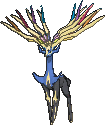
Xerneas, as rendered in Pokemon X (Nintendo 3DS, 2013)
08 · ALOLA

Pokémon Sun

2016NINTENDO 3DS~35 H

It throws out the eight-gym structure and replaces it with island trials. Take the original over Ultra Sun: the Ultra versions add content but rewrite the plot and lose Lillie’s arc, which is the best thing in the game.

New this generation: Z-Moves, regional forms — the first time old Pokémon were redesigned for a new climate — and no gyms at all.

If you are here for content rather than story: Ultra Sun carries a larger Pokédex, a real eighth trial, and the Episode RR post-game.
All 6 Generation VII games
  • Sun (2016) — on the route
  • Moon (2016) — paired version, same story
  • Ultra Sun · Ultra Moon (2017) — an Alola rewrite with a weaker story
  • Let’s Go Pikachu · Eevee (2018) — a Kanto remake — stop 01 for the third time
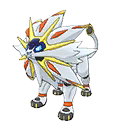
Solgaleo, as rendered in Pokemon Sun (Nintendo 3DS, 2016)
09 · GALAR

Pokémon Sword

2019NINTENDO SWITCH~30 H

The first brand-new region built for a home console — Let’s Go had reached the Switch a year earlier, but that was Kanto again. Galar brings the Wild Area, the series’ first real attempt at open space, and the direct ancestor of what Paldea would become.

New this generation: Dynamax and Gigantamax, the Wild Area with its free camera and roaming overworld encounters, and Galarian regional forms.

All 5 Generation VIII games
  • Sword (2019) — on the route as stop 09
  • Legends: Arceus (2022) — on the route as stop 10 — a different game entirely
  • Shield (2019) — paired version, same story
  • Brilliant Diamond · Shining Pearl (2021) — a Sinnoh remake — that is stop 04 again
Zacian, as rendered in Pokemon Sword (Nintendo Switch, 2019)
10 · HISUI

Legends: Arceus

2022NINTENDO SWITCH~35 H

Not another mainline entry — it changes the formula outright. You catch Pokémon in real time without entering a battle at all, filling the Pokédex is the actual goal rather than a side task, and it takes place in Sinnoh centuries before stop 04. It is the furthest the series has ever strayed from itself.

New this generation: real-time catching, agile and strong move styles, and wild Pokémon that can attack you directly in the overworld.

All 5 Generation VIII games
  • Sword (2019) — on the route as stop 09
  • Legends: Arceus (2022) — on the route as stop 10
  • Shield (2019) — paired version, same story
  • Brilliant Diamond · Shining Pearl (2021) — a Sinnoh remake — that is stop 04 again
Arceus, as rendered in Pokemon Legends: Arceus (Nintendo Switch, 2022)
11 · PALDEA

Pokémon Scarlet

2022NINTENDO SWITCH~40 H

A genuine open world: three storylines running in parallel that you can take in any order. It is the closest the series has come to its original promise — walk out into a large map and find out what is there. The post-game runs long: gym rematches, the Academy Ace Tournament, and two expansions.

New this generation: Terastallization, which changes a Pokémon’s type mid-battle, and an open world with no fixed order to it.

All 3 Generation IX games
  • Scarlet (2022) — on the route as stop 11
  • Legends: Z-A (2025) — on the route as stop 12
  • Violet (2022) — paired version, same story
Koraidon, as rendered in Pokemon Scarlet (Nintendo Switch, 2022)
12 · KALOS · LUMIOSE CITY

Legends: Z-A

2025NINTENDO SWITCH~30 H

The most recent release. It plays out entirely inside Lumiose City, years after stop 07, with real-time combat and a fresh batch of Mega Evolutions. It shipped for Switch 2 and for the original Switch — and it is that second version that matters if you are emulating.

New this generation: real-time battles with positioning and dodging, and the return of Mega Evolution after a decade away.

All 3 Generation IX games
  • Scarlet (2022) — on the route as stop 11
  • Legends: Z-A (2025) — on the route as stop 12
  • Violet (2022) — paired version, same story
Lucario, as rendered for Pokemon Legends Z-A (Nintendo Switch, 2025)

How to play them

Original hardware is the purest way to do this, and if the carts and consoles are sitting in a drawer, use them. Most people do not have them any more. What follows is a suggestion, not a requirement — any emulator that runs the system will do, and there are good ones missing from this table.

SUGGESTIONCOVERSSTOPSWHERE
RetroArch
mGBA + melonDS cores
Game Boy, Game Boy Color, GBA, Nintendo DS01 – 06most distro repos
AzaharNintendo 3DS07 – 08official site
EdenNintendo Switch09 – 12official site

RetroArch earns its place on the first six stops for one specific reason: it puts them in a single application with a single library, instead of making you juggle four standalone emulators. On Arch, for instance:

sudo pacman -S retroarch libretro-mgba libretro-melonds
Azahar is what came after Citra. Citra shut down in 2024 following the lawsuit against Yuzu; Azahar grew out of merging two of its forks — Lime3DS and PabloMK7’s — into one project. It is actively developed and runs on Linux, Windows, macOS and Android.
Use fast-forward. Everything up to stop 06 is padded with slow attack animations, slow text and long walks. Every emulator here supports it, and it roughly halves the hour estimates without costing you a line of story.
On the legal side. Emulators are legal software. The games do not come with them — the clean path is dumping cartridges and consoles you own yourself. 3DS and Switch emulation also needs keys taken from your own console. That part is on you, and this page will not point you anywhere else.

What is left out

Ten titles do not make the route. None are cut for being bad — they are cut because they would tell you a story you already played. Each one is also listed inside its own generation above.

TITLEWHY NOT
Red · BlueYellow is the refined cut of that same story
Gold · SilverCrystal is the refined cut of that same story
Ruby · SapphireEmerald supersedes them, with both villain teams
Diamond · PearlPlatinum supersedes them and fixes the pacing
FireRed · LeafGreenKanto remake — that is stop 01 again
HeartGold · SoulSilverJohto remake — that is stop 02 again
Omega Ruby · Alpha SapphireHoenn remake — that is stop 03 again
Let’s Go Pikachu · EeveeKanto remake — that is stop 01 for the third time
Brilliant Diamond · Shining PearlSinnoh remake — that is stop 04 again
Ultra Sun · Ultra Moonan Alola rewrite with a weaker story than stop 08

The paired versions of the games that are on the route — Violet, Shield, Y, Moon, White, White 2 — drop out for the same reason: a handful of exclusive Pokémon and nothing else.

Where the route ends

Stop 12 is a real ceiling, and not for want of games.

Generation 10 arrives in 2027 and will not be emulable. Pokémon Winds and Pokémon Waves were announced on 27 February 2026 and are Switch 2 exclusives. As of mid-2026 no emulator runs commercial Switch 2 software: the console has none of the hardware holes the original’s Tegra X1 had, and the optimistic estimates point at 2027–2028 for the first boots. Some researchers say a decade.

That said — twelve games and three hundred-odd hours sit between here and that wall. It is a long way off.